Key takeaways
- Pile height is the length of the blades above the backing.
- Density and face weight describe how full the turf is.
- Blade shape and color mix affect look and feel.
- Backing strength and drainage matter for pets and play.
Pile height
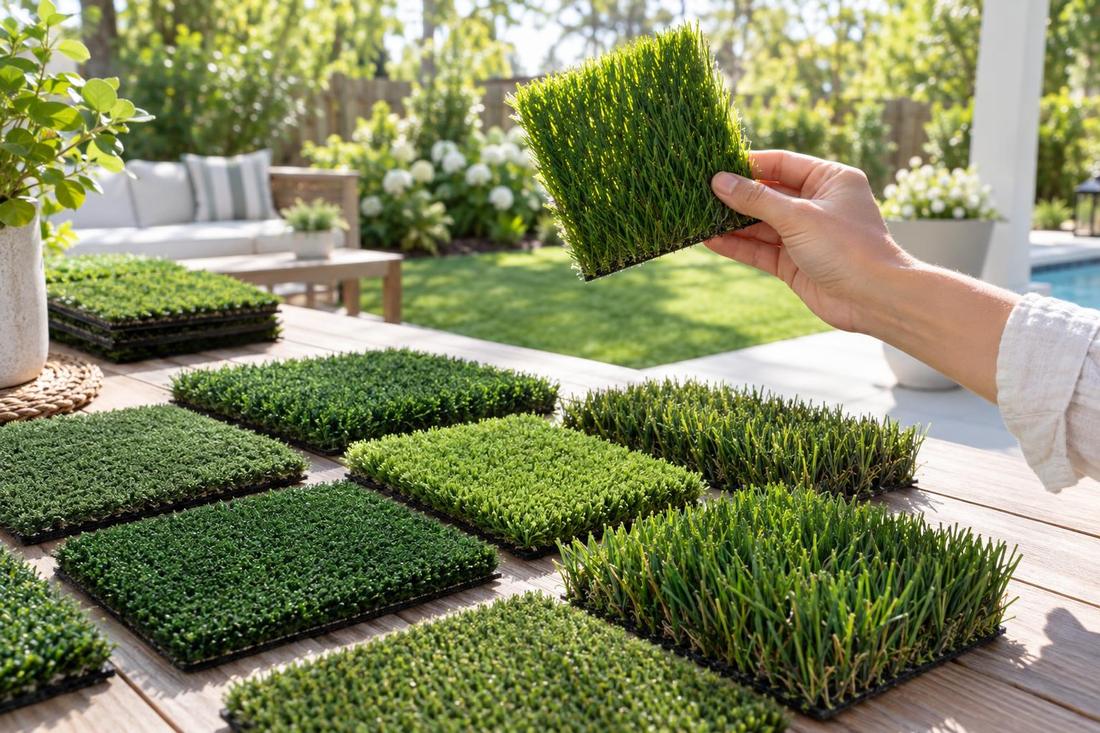
Pile height is the length of the blades. Shorter pile is firm and tidy and is often used for putting greens and sports. Longer pile looks fuller and softer and is popular for lawns, but it can mat down under heavy use.
Most homes land in the middle, balancing a lush look with durability.
Density and face weight
Stitch rate and face weight describe how much yarn is in the turf. Denser turf looks fuller, stands up better and feels more like real grass. Very dense turf can drain more slowly if the backing is not designed for it.
We show samples side by side so you can feel the difference.
Blade shape and color
Blades come in different shapes, such as flat, curved and ridged, which change how light reflects. Multi-tone blends with a thatch layer look more natural than a single flat green.
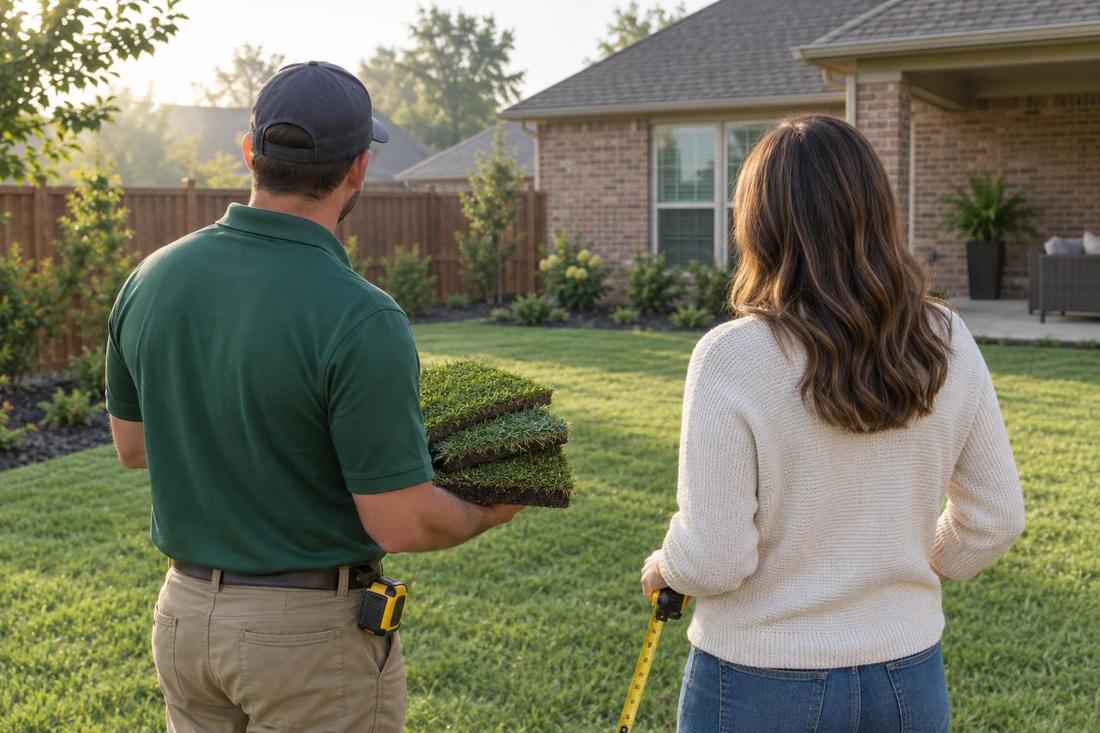
View samples in your own yard to judge the color in real light.
Backing
The backing holds the blades and carries drainage. For pet areas and play spaces, look for strong, perforated backing that drains freely. Weak backing can wrinkle, tear or hold water.
A good installer tells you exactly which product they use and why.
Quick answers
What pile height is best for a front lawn?
Many front lawns use a mid-length, multi-tone blade that looks full and stays upright.
Is denser turf always better?
Not always. Balance density with drainage and the way the space is used.