Key takeaways
- Infill holds the blades up and weighs the turf down.
- Silica sand is common and simple but can hold odor.
- Antimicrobial and coated infills are made for pet areas.
- Rubber infill is used for sports but can be hot.
What infill does
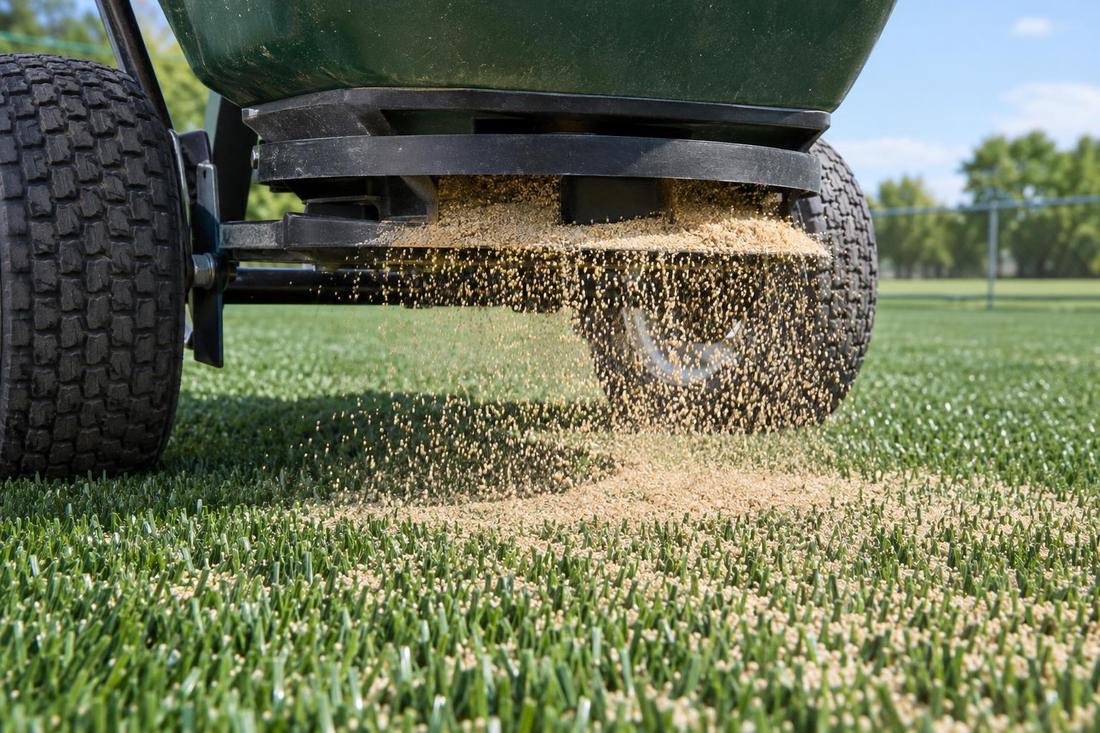
Infill is the granular material brushed between the blades. It keeps blades upright, protects the backing, adds weight so the turf stays flat and can cushion footsteps.
Choosing the right type depends on how the space is used.
Silica sand
Sand is a widely used infill that is simple and durable. It works well for many lawns, but it can hold moisture and odor in pet areas if it is not rinsed.
Rounded sand is gentler on the blades than sharp sand.
Pet-friendly infills
Antimicrobial and coated infills help control odor and bacteria and drain well. They are a common choice for dog runs and potty areas.
These products do not remove the need for rinsing, but they make it easier.
Rubber and other options
Rubber infill adds cushion and is used on some sports fields and play areas. It can run hotter than sand in the sun and may not suit every yard. Newer infills use alternative cooling or organic materials.
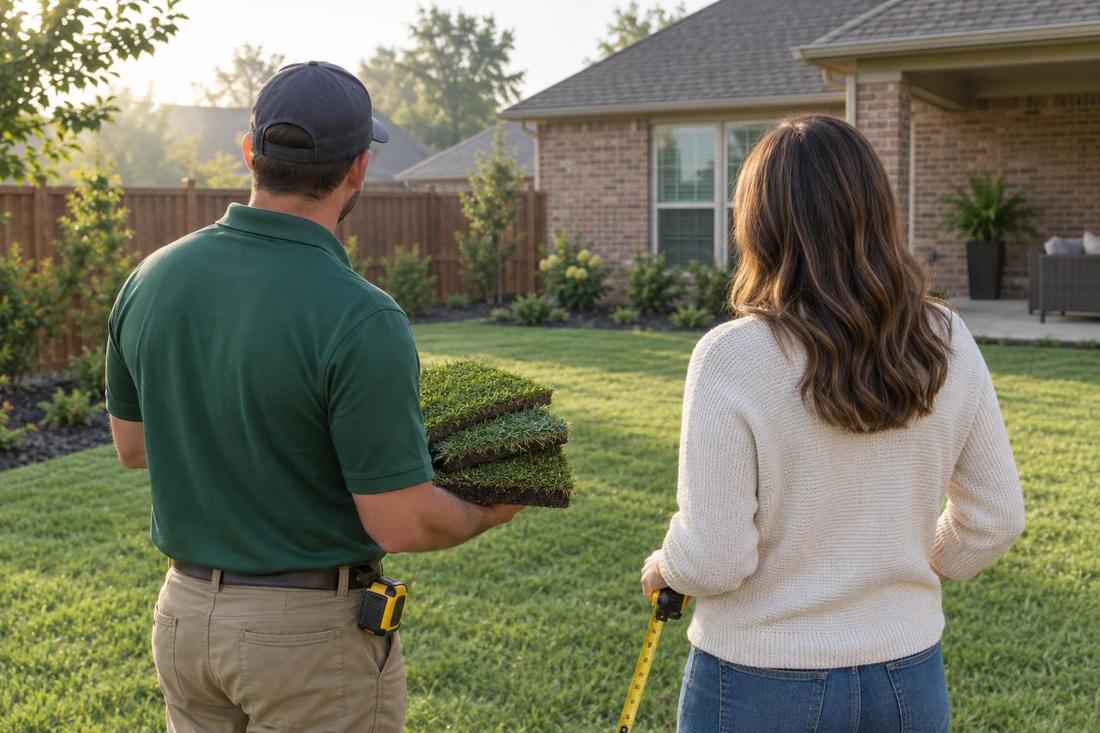
We explain trade-offs for each option and suggest one that fits your yard.
Quick answers
Do all turf lawns need infill?
Most do. Some products need less, but infill helps blades stand and keeps turf flat.
Can infill be replaced later?
Yes. High-use areas often need a refresh, which is a quick service.