Key takeaways
- Old grass and soil are removed to a set depth.
- A compacted stone base gives the turf its smooth, stable surface.
- Seams, edges and anchors keep the turf tight.
- Infill and brushing finish the surface and help it stand up.
Step one: measure and mark
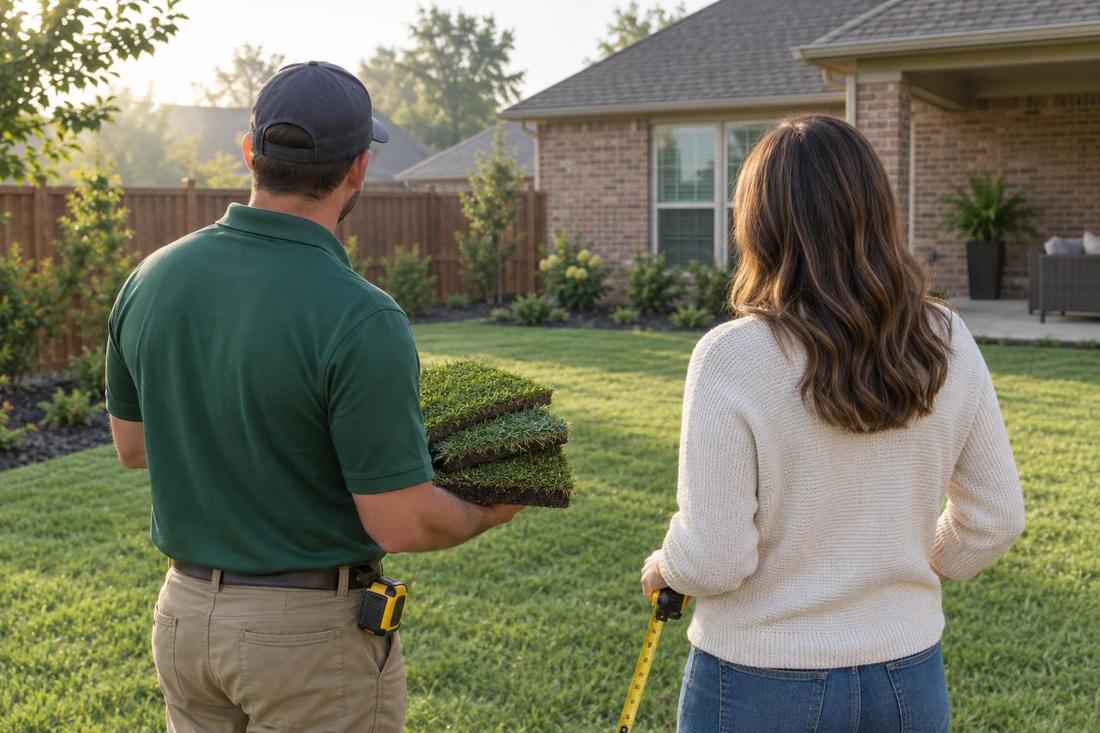
We measure the area, mark the edges and check drainage, sprinklers and utilities. We decide where seams will fall, how the turf will be laid and how water will leave the yard.
This is also when we confirm borders and any beds or paths that sit beside the turf.
Step two: remove and prepare
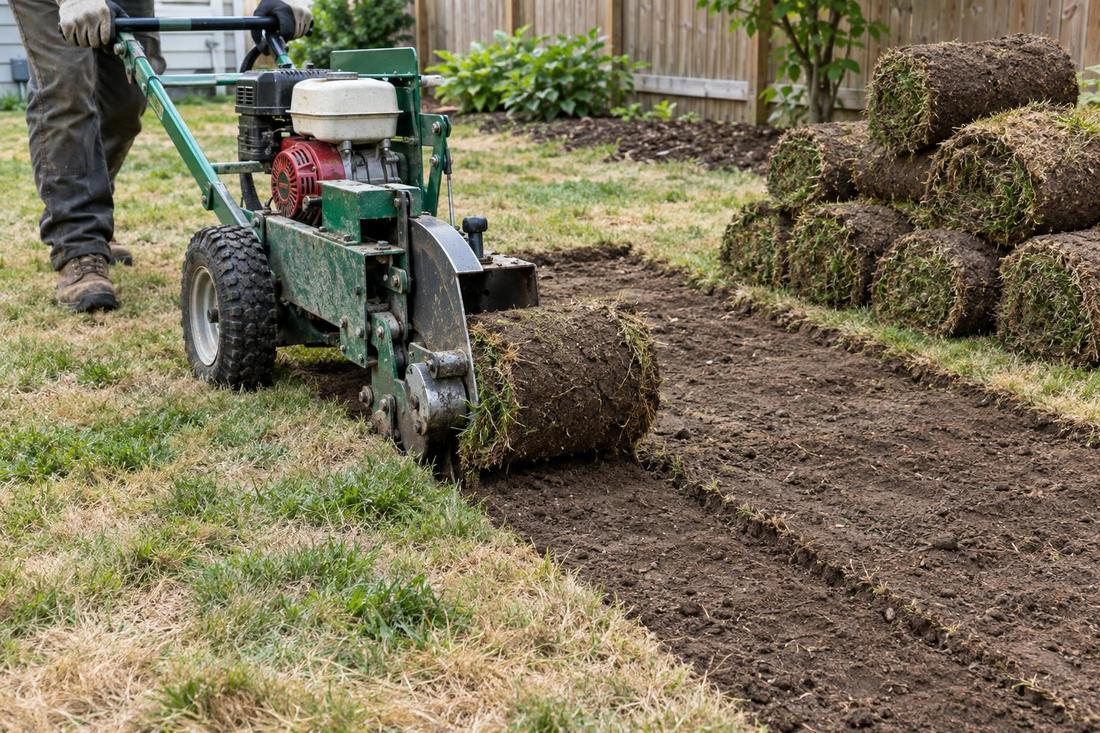
The old lawn is cut out and hauled away, then the soil is graded and a weed barrier is added if needed. We cap sprinkler lines and fix any low spots.
Good prep prevents the dips and wrinkles that spoil many turf lawns.
Step three: build the base
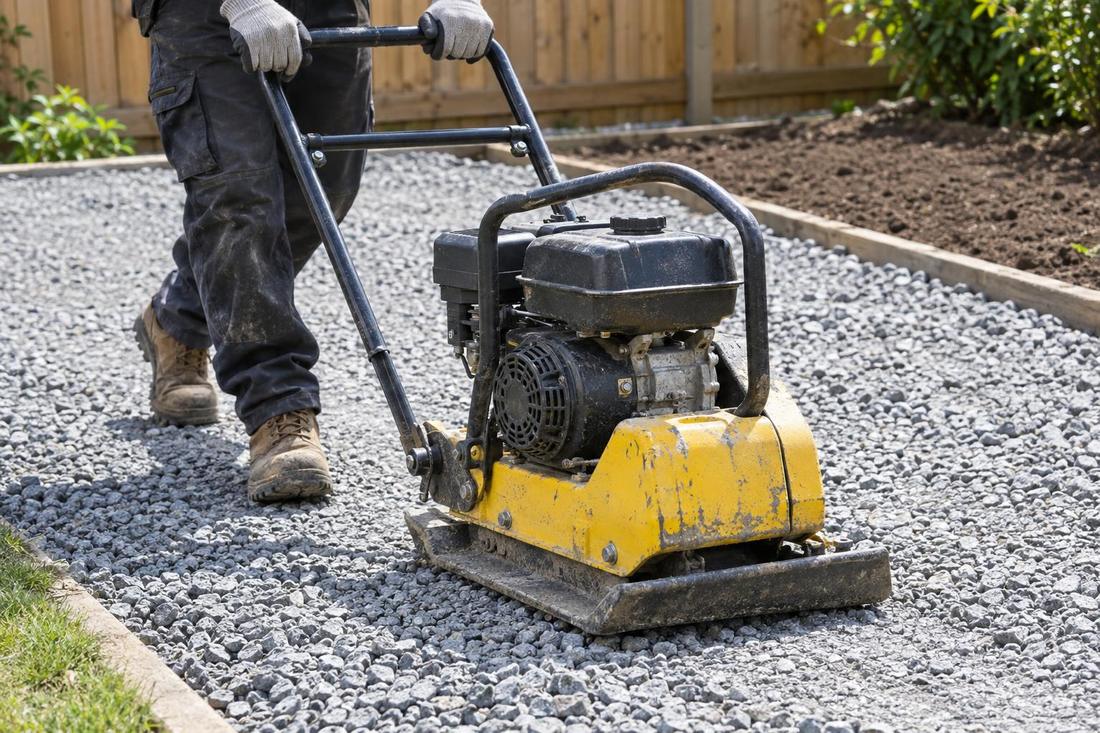
A layer of crushed stone is spread, leveled and compacted in lifts. The base must be firm, smooth and sloped slightly so water moves away. For pet areas, the base is chosen to drain freely.
Many homeowners are surprised how much of the job is base work. It is what makes the turf last.
Step four: lay, seam, anchor and fill
The turf is rolled out, cut to fit, seamed with tape and adhesive and anchored along the edges. Infill is spread, then the blades are brushed upright for a natural look.
A final walk-through checks seams, edges and drainage before we clean up and leave.
Quick answers
How long does an install take?
Most residential yards take one to three days, depending on size and prep.
Do I need to be home?
Not for the whole job, but we will walk the finished yard with you at the end.